
Daredevil: Born Again Just Argued Against the Police State. Punisher: One Last Kill Wants You to Cheer For It. They Came Out a Week Apart
By Nathanial -né Ashby- Ashtier on May 13, 2026
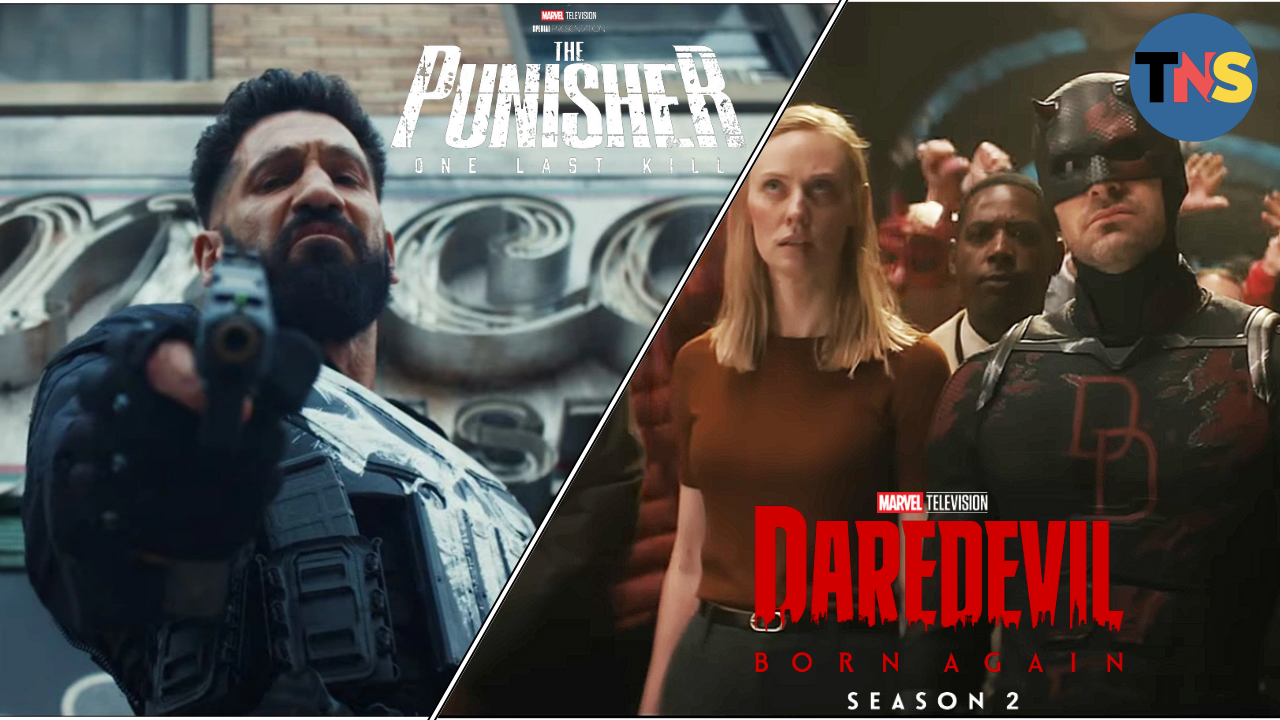
Marvel Television released two things in the last week. Daredevil: Born Again Season 2 finished its eight-episode run on Disney+ on May 5. The Punisher: One Last Kill dropped on May 12 as a Marvel Television Special Presentation, which is the same format as Werewolf by Night and The Guardians of the Galaxy Holiday Special, except TV-MA and 48 minutes long. One of them is the best thing Marvel has put on television in years. The other is a Charles Bronson movie, wearing a Marvel costume. Both projects are about who gets to kill whom and why. One asks the question carefully. The other doesn't. I want to talk about both, and I want to talk about why they came out a week apart and don't seem to know each other.
I'll start with the Punisher special, because what it gets wrong tells you a lot about what Born Again Season 2 gets right.
The Punisher: One Last Kill
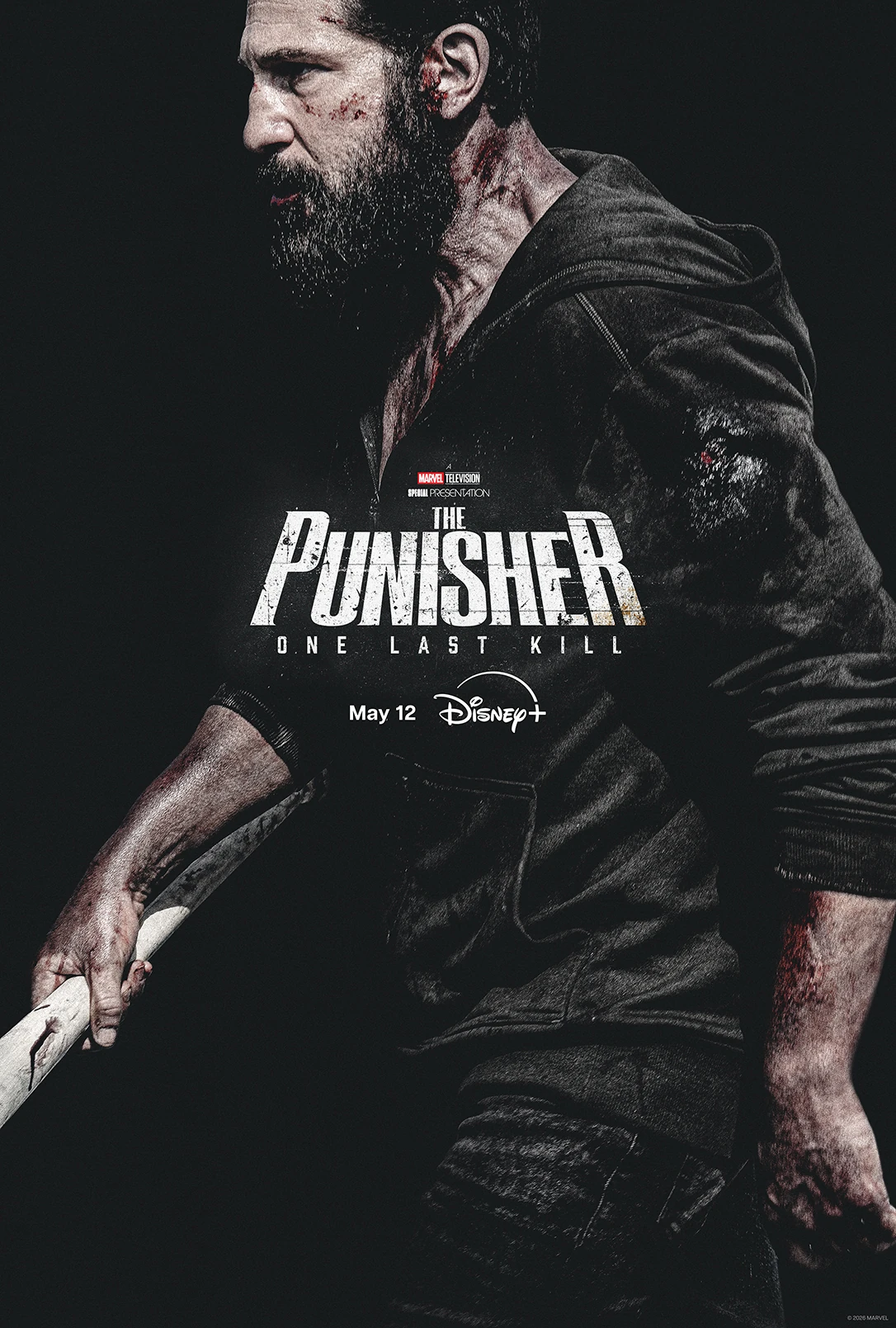
The Punisher: One Last Kill is directed by Reinaldo Marcus Green, who made King Richard (the one that got Will Smith his Oscar) and Bob Marley: One Love. He also directed episodes of We Own This City, which is the David Simon and George Pelecanos show about police corruption in Baltimore. He co-wrote this special with Jon Bernthal. The villain is Ma Gnucci, played by Judith Light, head of the Gnucci crime family. Comic readers will know that name from Garth Ennis's "Welcome Back, Frank" run from the early 2000s. Jason R. Moore is back as Curtis Hoyle from the Netflix Punisher. Bernthal is, of course, Bernthal.
The setup, spoiler-free: Frank Castle is trying to find meaning beyond revenge. He gets pulled back in. He kills a lot of people. That is more or less the entire premise.
Let me start with what works, because some of it works.
Bernthal is great. He's always great. The mental health stuff in this is actually really strong. Frank's hallucinations, the way the trauma keeps cracking the surface of every quiet moment, the exhaustion he's carrying in his shoulders, even when nobody is hitting anyone. Bernthal has been playing this character for a decade, and he keeps finding new things in him. The Punisher in this special is more haunted than he has ever been on screen. That part is real.
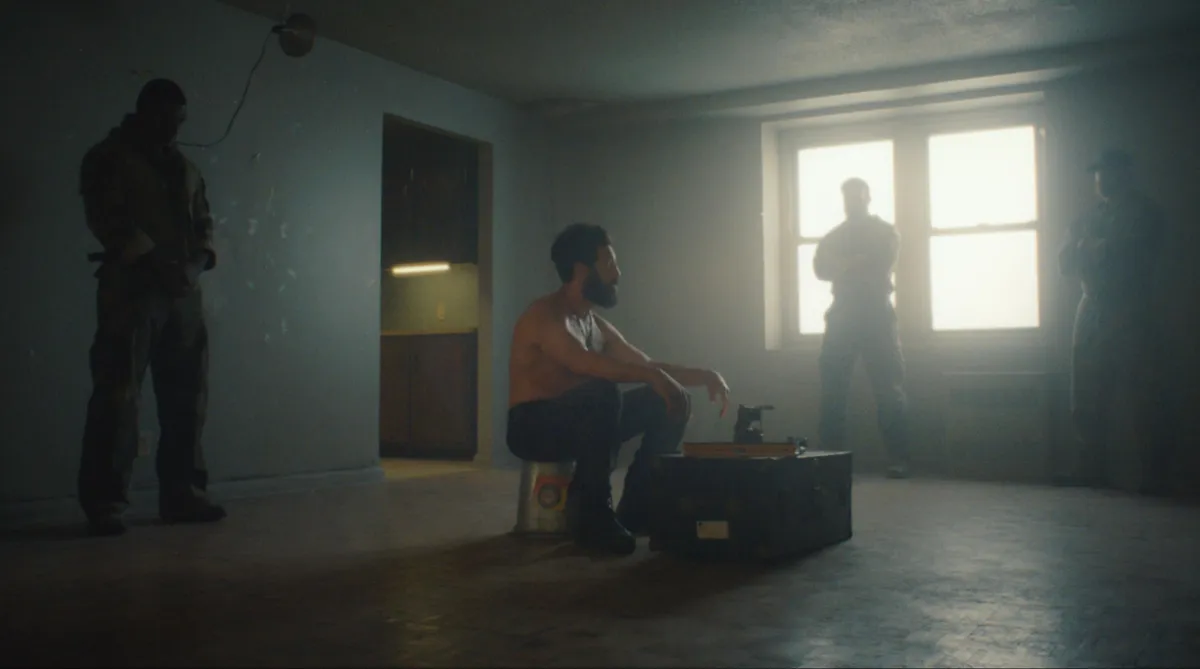
The action is good. I want to be precise about this, because "the action is good" is the phrase that lets a film off the hook. The action in this special is good as a series of video game cut scenes. The choreography is tight, the staging is brutal, and the practical work is committed. If you turned off the dialogue and watched this on a phone with no audio, you would have a good time. That is a real category of praise, and I am giving it honestly. It's the reason stunt work is finally getting an Oscar category; there is real craft here. Reinaldo Marcus Green can direct an action sequence. That is not in dispute.
Now I have to talk about what surrounds the action, because that is the problem.
This special has no story. I don't mean it has a thin story, or a familiar story, or a story that doesn't quite land. I mean, it does not have a story. Frank Castle goes to a neighborhood. The neighborhood is, the film insists, overrun by roving bands of criminals. He kills them. Then he kills more of them. Then the villain who sent them after him escapes. Through this experience, he somehow learns to live beyond his own revenge. That is the structure. Though that turn at the end isn't really earned by what precedes it.
This is the Charles Bronson framework. This is Death Wish. This is Dirty Harry. This is the reactionary urban-decay fantasy that lived rent-free in white American imaginations in the 70s and never really left. The version of New York where the social contract has collapsed, and only one man with a gun can restore order. That genre has a name, a politics, and a long history, and Punisher: One Last Kill is firmly within it.
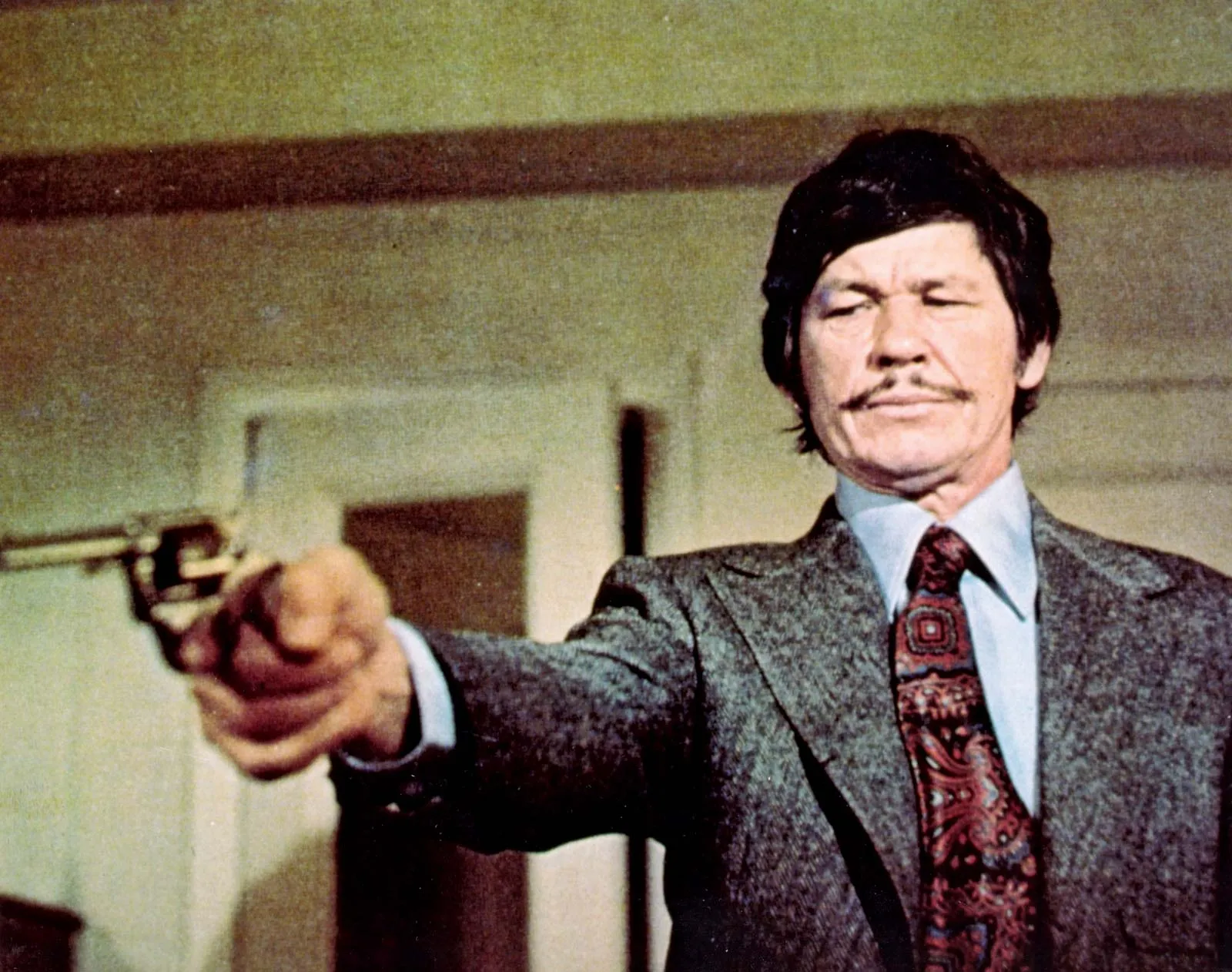
The improvement this film makes over the Bronson lineage is that some of Frank's victims are Black and brown, and some of the hoodlums are white. That is the upgrade. I'm not going to pretend that doesn't matter at the margin. But it also does not solve the underlying problem, because reactionary politics aren't actually exclusive to any one race. There were Black Trump voters. There were Latino Trump voters in larger numbers in 2024 than in 2016. The Bronson framework can absorb non-white faces and continue functioning as the Bronson framework. Adding diversity to the body count is not the same as questioning whether the body count should exist.
I want to name something specifically because the framework this film operates within is not abstract to me. In 1989, a prominent New York real estate developer who is now a sitting US president took out a full-page ad in four New York newspapers calling for the death penalty to be reinstated while the Central Park jogger case was still unfolding. The accused, Antron McCray, Kevin Richardson, Yusef Salaam, Raymond Santana, and Korey Wise, were five Black and Latino teenagers, ages fourteen to sixteen. They were innocent. Their convictions were vacated in 2002. That real estate developer, who is now our president, has never recanted. He took out that ad in the same generic "urban menace" register Punisher: One Last Kill operates in. The Charles Bronson framework is not a film school abstraction. It has a politics, a body count, and named beneficiaries. The people who watch this film and feel something righteous click into place at the sight of anonymous urban figures getting put down like rabid animals by a man with a gun are responding to the same call that ad was making. I cannot watch this special and not think about that.
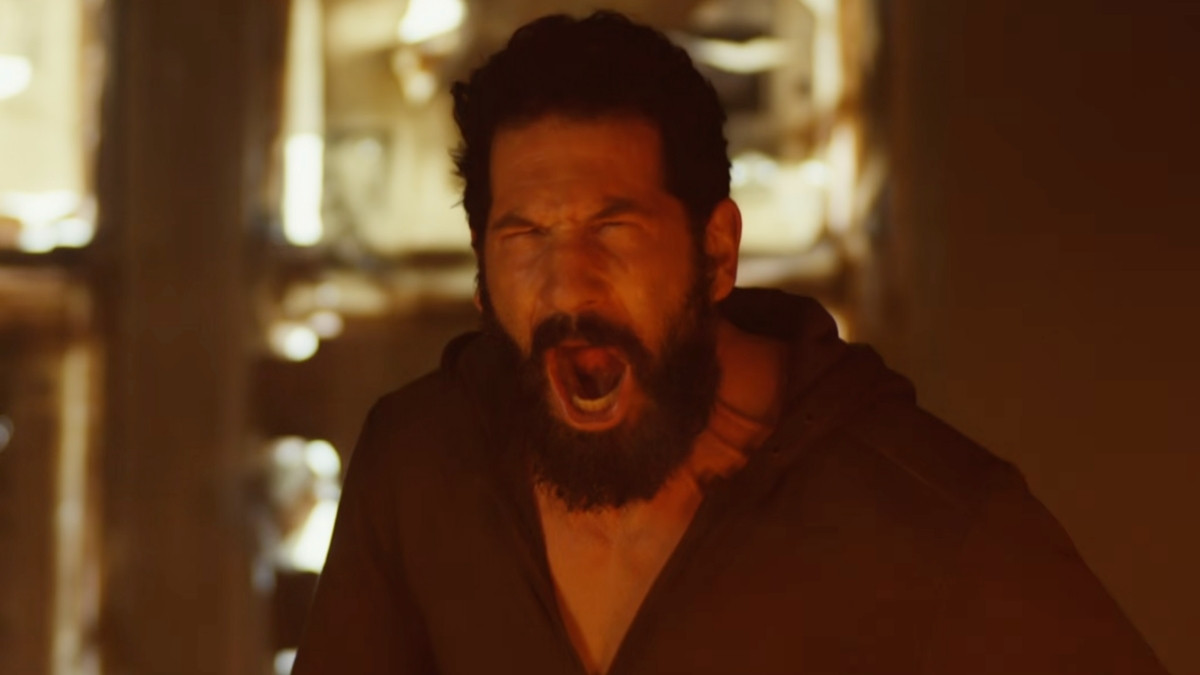
Here is the test the film fails. Every comparable property gives you a moral framework for the violence. John Wick, the people he kills are assassins. They chose the life. They have killed before and will kill again. The math is clean. The original Netflix Punisher, Frank, kills crime bosses, corrupt soldiers, and fascist cops. People who have done specific evil and continue to do specific evil. Ballerina, the recent John Wick spinoff, Ana de Armas, is mowing through a whole town of murderous cult members. They are murderers. They have a body count. The Equalizer with Denzel, corrupt Russian mob, human traffickers, and specific named harms. Even Dexter, which is a less defensible analogy, gives you a coherent code: he kills people who have killed and gotten away with it. The audience is given the information they need to decide whether to put aside the carnage.
In One Last Kill, the worst thing I see anyone do is attempt sexual assault. That is horrific. That is something the law, I, and any decent person take seriously. It is not something anyone gets the death penalty for in any functioning legal system on Earth, except in the imaginations of the men who watched too much Death Wish and decided that was the right answer to protect the virtue of certain (usually white) women. And for the rest of the runtime, the people Frank kills are doing things that are objectively bad but in no way comparable to what John Wick's assassins or the original Punisher's mob enforcers did to earn their place on the wrong end of a barrel. The film cannot tell me who these people are or what they specifically did to merit summary execution. They are urban. They are hoodlums. They are scum. That is the entire moral case the film makes.
And then the worldbuilding falls apart on its own terms. We are in the MCU. Spider-Man is in Queens (or maybe he'll be in Manhattan later this year in Brand New Day). Kamala Khan (i.e. Ms Marvel) is across the river in Jersey. Daredevil is in Hell's Kitchen. Iron Fist exists. Luke Cage exists. Jessica Jones exists. If a single neighborhood of New York were actually overrun the way this special depicts, three or four superpowered individuals who specialize in non-lethal pacification would be in that neighborhood within the hour. The film never accounts for this. The film never even seems aware that this is a question. The film takes place in a version of the MCU where Frank Castle is the only person who can solve this problem, and the only solution is a body count. That is not how this universe is supposed to work.
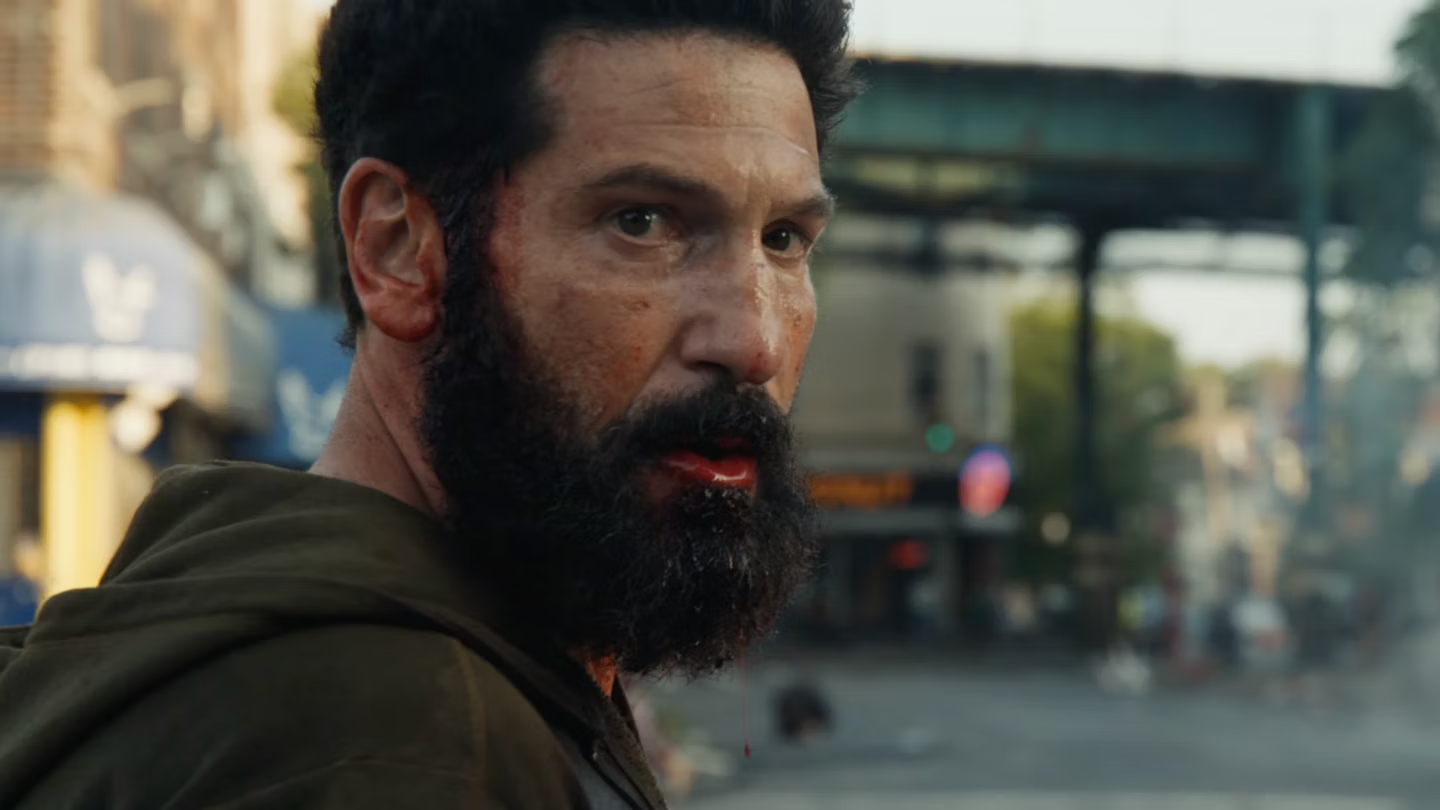
And the film's deeper logic, what it implies about why this neighborhood looks the way it looks, is something I want to name plainly, because I don't think the filmmakers fully clocked what they were saying. The Gnucci crime family ran this neighborhood for a generation. Frank, in his backstory before this special, took out the Gnuccis. The neighborhood, once the organized criminal structure was removed, descended into the chaos we see in the film. The implicit argument is that the Gnuccis were the only thing keeping the underclass in check. The strong hand of the mob held back a worse, more "natural" criminality, and Frank's elimination of that strong hand unleashed the people we see roaming the streets.
That is a fascist account of social order. It is the argument fascism has always made about the people fascism contains. The point is not that the filmmakers sat down to make fascist propaganda. The point is that the film's social imagination is built around the fascist premise that ordinary people become animals unless a violent hierarchy contains them. You don't need a Rousseau-versus-Locke philosophy seminar to see the rotten logic. You just need to ask what the film thinks people are when nobody is holding their leash. The film thinks they are this. I think the film is wrong. I think people are more than the worst thing they could do when the conditions of their lives go bad. The film does not. And that, more than anything else in it, is the part I cannot forgive.
I am giving Punisher: One Last Kill a 5 on the TNS scale. A "Game Night" rating. Fine if you have other activities planned. Watch it with friends, talk over the slow parts, and enjoy the action set pieces.  A 5 is not a dismissal. Bernthal is genuinely doing great work. Green can direct. The film is not unwatchable. The film is not boring. But the action is in service of a moral framework that does not hold up. And when a Punisher story cannot tell me why I am supposed to root for the man with the gun, the Punisher story is broken. I am not asking the film to make Frank a hero. I am asking it to take seriously the question of who he is killing and why. One Last Kill does not. It just gives you the urban hellscape and the bullets and trusts that you will figure out who deserved what. That trust is misplaced. That trust is, frankly, the part that bothers me most.
The Bridge That Wasn't
Here is the strange part about the timing.
At the end of Daredevil: Born Again Season 1, the show set up something significant with Frank Castle. I'm being deliberately vague for the spoiler-free folks. But if you watched Season 1, you know what I mean. Frank was positioned to be part of where the show was going.
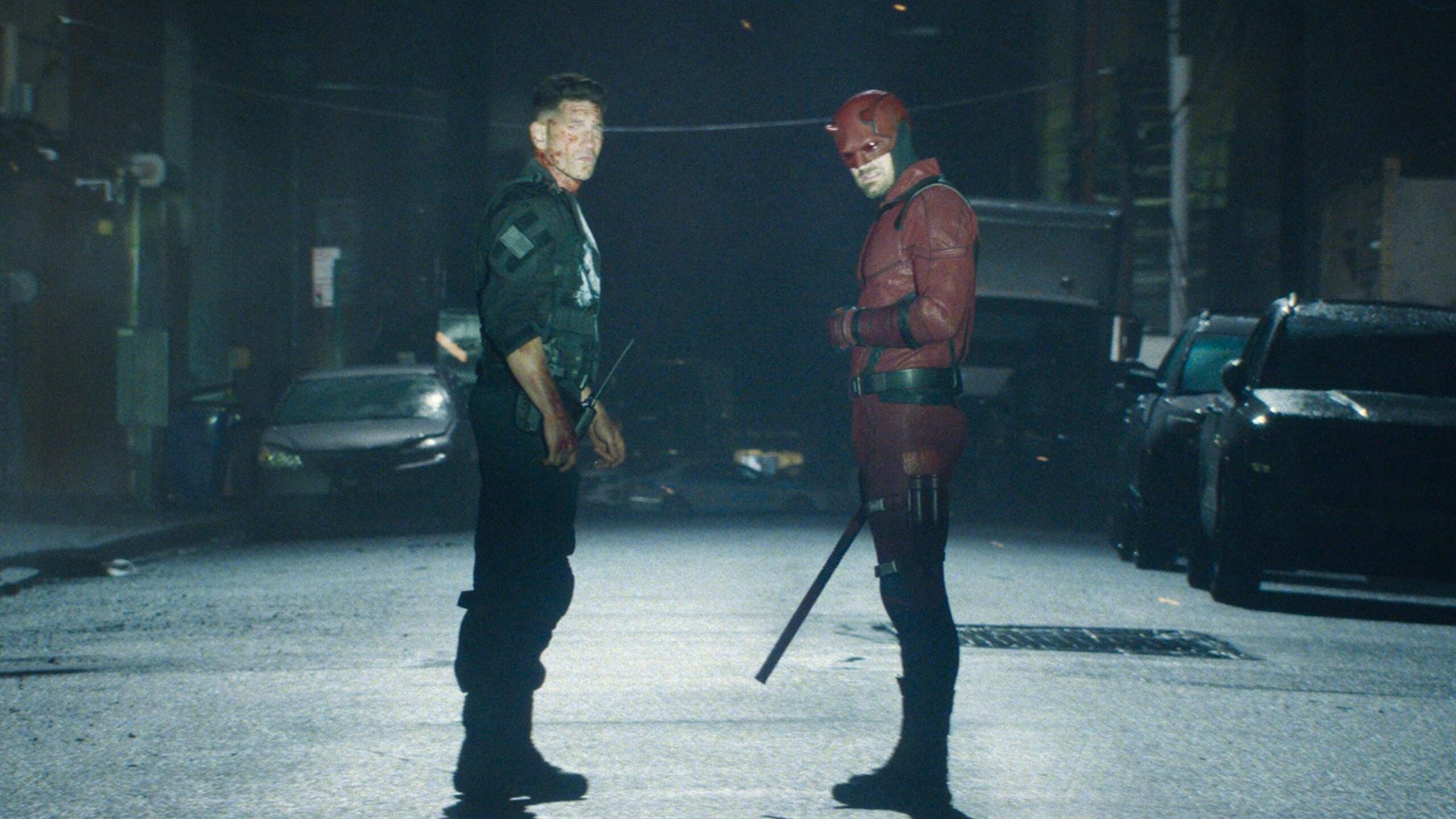
And then Season 2 of Born Again drops, and Frank is not in it. At all. Not a flashback, not a reference, not a piece of news on a television in the background. Sana Amanat said his story would be "continued in One Last Kill." The implication was that the special would be the bridge. The thing that explained where Frank had been and where Frank was going.
It is not that bridge. One Last Kill does not pick up the thread that Season 1 set up. It just tells a self-contained Charles Bronson story in a corner of New York that does not appear to be connected to the New York where Daredevil and Kingpin are tearing each other apart. The structural job this special was given, connect Season 1 to whatever comes next, it does not do.
Which is a particular shame, because Season 2 itself is excellent.
Daredevil: Born Again Season 2
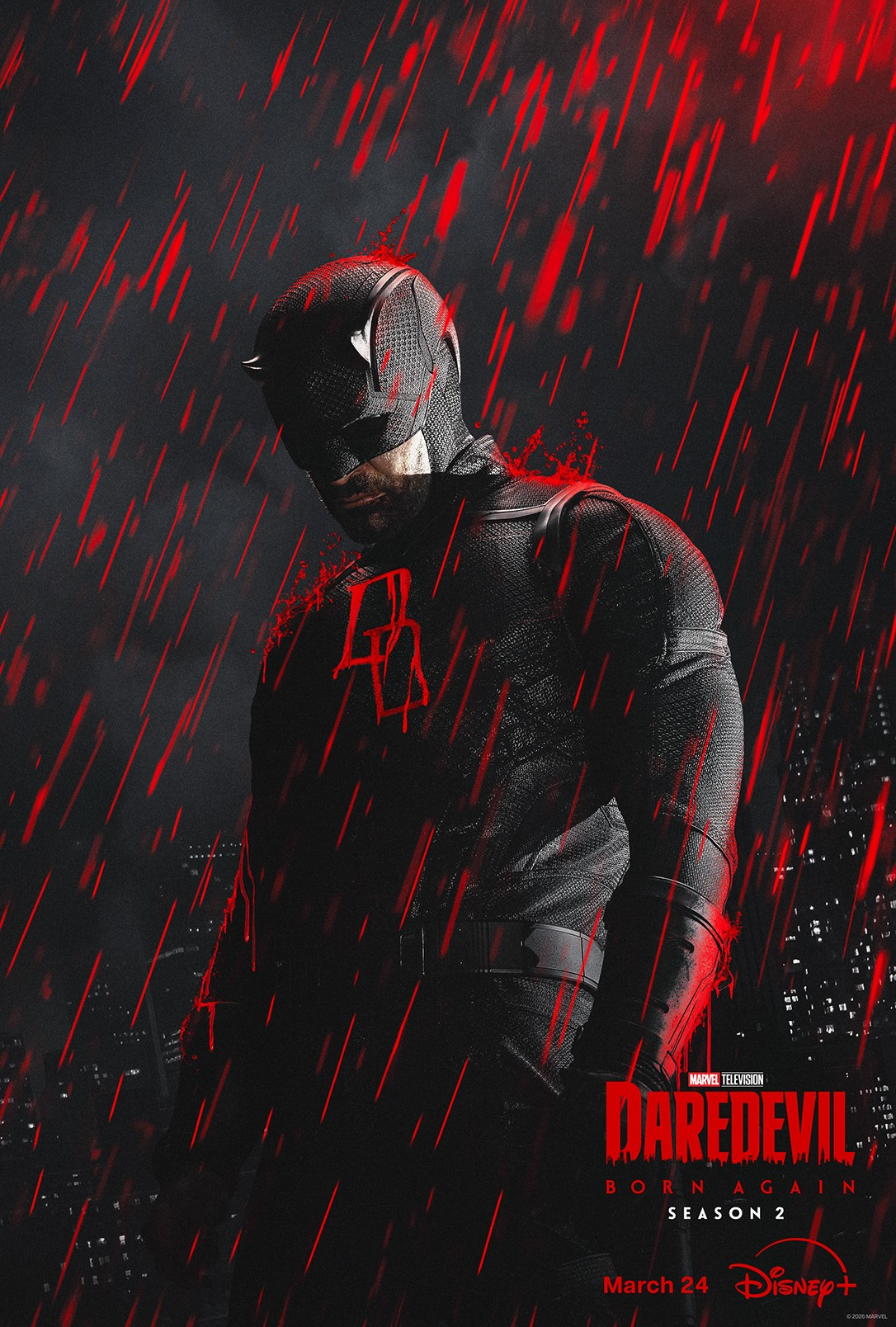
Daredevil: Born Again Season 2 is showrun by Dario Scardapane, who previously wrote on the original Netflix Punisher. Unlike Season 1, which had three credited showrunners and a mid-production overhaul everyone could see in the seams, Season 2 has one voice running point. The change is visible in every episode.
Justin Benson and Aaron Moorhead are back as lead directors. Solvan "Slick" Naim, Angela Barnes, and Iain B. MacDonald split the rest. The black Daredevil suit with the red double-D emblem is back. For the comic readers, that is a Shadowland reference. And it shows up in a way that earns the visual.
The setup, spoiler-free: Wilson Fisk is the Mayor of New York. He has declared open war on Hell's Kitchen's masked vigilante. Matt Murdock is fighting back from the shadows, trying to dismantle Fisk's political and criminal empire from underneath.
Almost everything works.
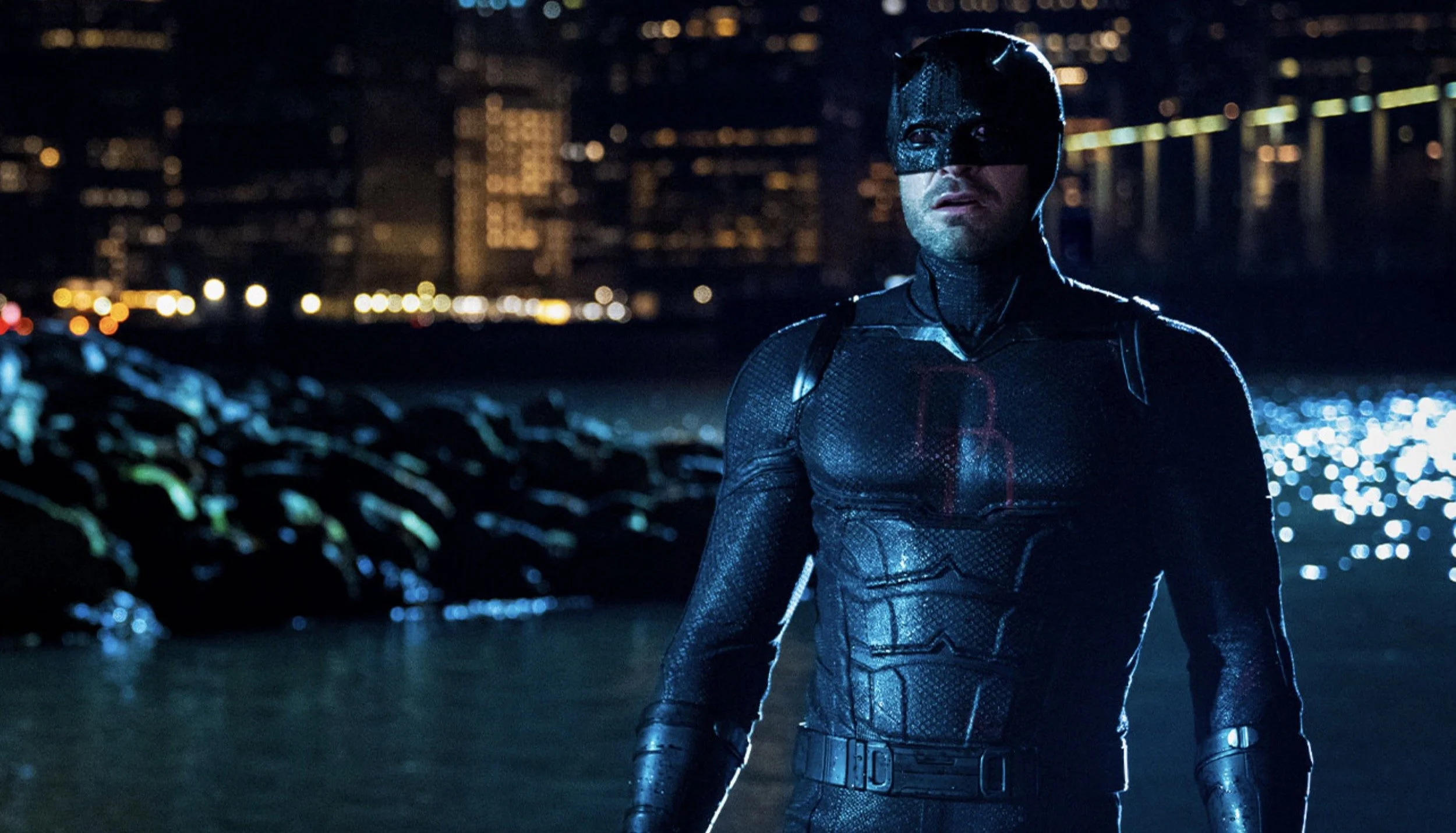
Charlie Cox is doing the best work he has done as this character since the second season of the Netflix run. There is a tiredness to Matt Murdock this season. A man who has been fighting too long, with too few wins, who can feel the loss before it arrives. Cox plays it with a stillness that the show keeps cutting open in unexpected ways. He earns every silence.
Vincent D'Onofrio has more to do this season than in Season 1, and what he does with it is something I want to spend a minute on. Wilson Fisk has always been a man of volcanic restraint. D'Onofrio plays him as someone who is mostly successfully containing himself, with the threat of rupture as the engine. This season the containment starts failing. The man who was using the levers of city government to do his violence at scale starts losing the discipline to keep using them. And D'Onofrio plays the slippage so carefully that you don't see it until it has already happened. By the time you realize Fisk has broken, the breaking is several episodes behind you.
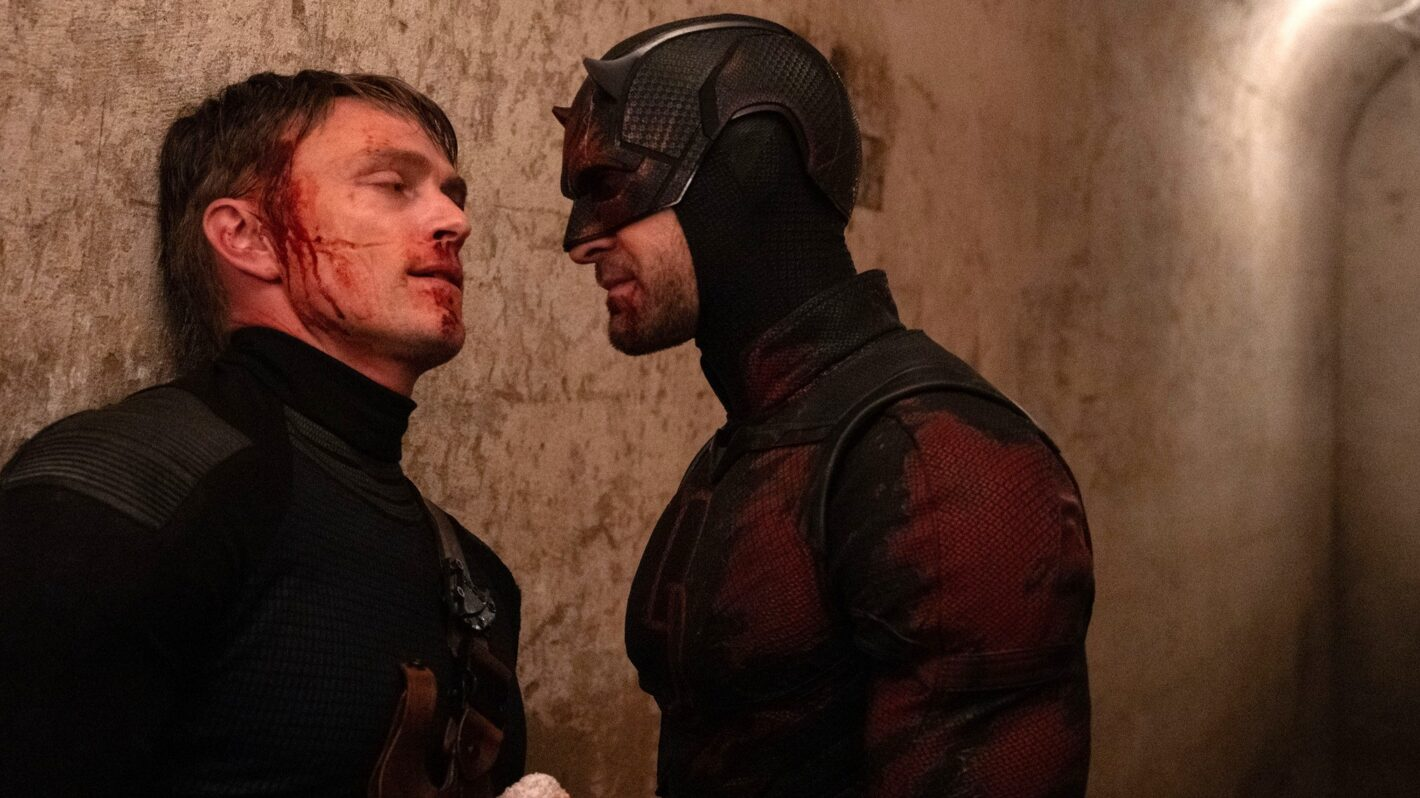
Wilson Bethel's Bullseye gets a "redemption arc" this season. I am putting that in air quotes for a reason. The shape and beats of a redemption arc are there. The show wants you to track Dex's journey from where he was to somewhere new. But the destination the show actually delivers him to is one I am very, very ambivalent about. The structural argument the season makes about redemption is sharper and bleaker than I think most viewers will clock on a first watch. We will come back to this in the spoiler section. For now, Bethel is doing some of the most interesting acting in this universe, and the character is more interesting than he was last year. Whether what happens to him counts as redemption is a question the show wants you to keep open. I will argue, in the spoiler section, that the answer is no.
The middle of the season, episodes 5, 6, and 7, "The Grand Design," "Requiem," and "The Hateful Darkness," is the strongest stretch of Marvel Television since the original Netflix Daredevil Season 2 in 2016. Three episodes in a row where the character work, the political work, and the action work are all firing at the same frequency. That doesn't happen often.
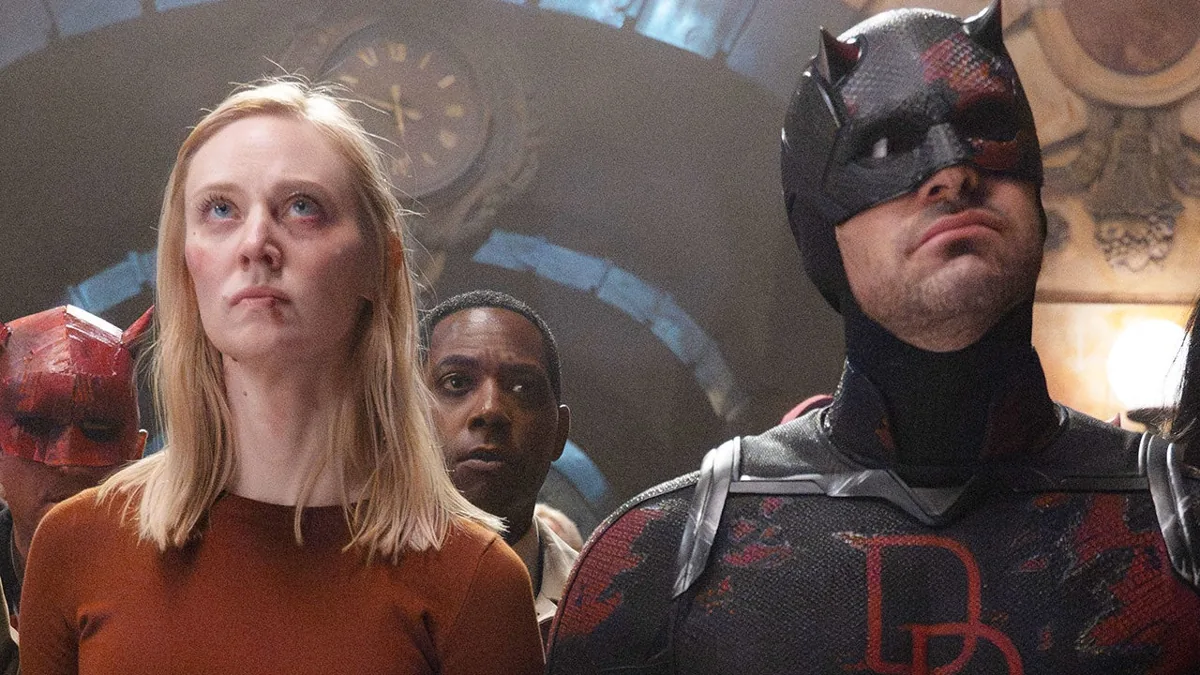
And the finale, Iain B. MacDonald's "The Southern Cross," sticks the landing. I am trying to calibrate that claim carefully, because superlatives don't help. So let me put it this way: it is stronger than most of the Marvel Netflix finales, possibly all of them. It is a clear step up from the Born Again Season 1 finale, which itself had a strong but somewhat annoying cliffhanger ending. I am not going to rank this against the broader Disney+ field because Andor exists, and Loki exists, and that's a different conversation. But within the Marvel street-level corner of this universe, this is the best last episode I have seen.
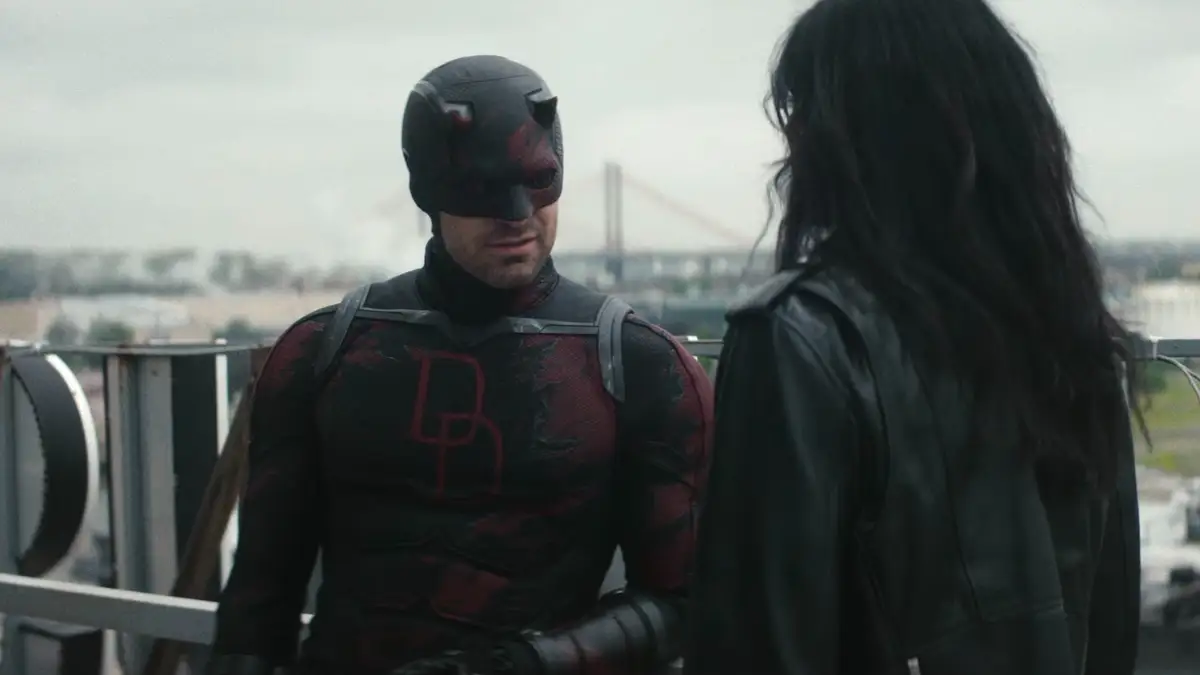
Krysten Ritter is back. And there are other cameos that I won't spoil. Margarita Levieva's Heather Glenn arc finally pays off the setup from Season 1. Deborah Ann Woll gets the showcase the show has been promising her for two seasons. Vincent D'Onofrio and Ayelet Zurer share scenes in episode 5 that I will be thinking about for a long time.
It is not perfect. The Bullseye arc, as I said, is intellectually interesting but morally murky, and I am not entirely sure the show will be able to recover from it in Season 3 if they use him again. That is a structural risk, one that the season has chosen deliberately. The Frank Castle absence is felt. The show pretends it isn't. Season 2 is structured as if Frank had never been set up at the end of Season 1, and that pretense does not fully hold. If you watched Season 1 you spend a few episodes waiting for him, and when he doesn't arrive, the season has to work harder to hold your attention. It does the work. But it shouldn't have had to.
And the viewership. I am a critic, not a Nielsen report, but Season 2 had a 54 percent drop in hours watched and a 46 percent drop in views from Season 1. The show is a critical hit. The show is also, by Disney's metrics, losing audience. That is a conversation Marvel Television is going to have to have with itself in a hurry, because this is the best work they have put out in years, and there are fewer people watching it than there were last year. This may be due to them dropping at the same time as a really strong season of Invincible and the last season of The Boys.
I am giving Daredevil: Born Again Season 2 a 9 on the TNS scale. A "Movie Marathon" rating. A season so good you will sit through a full re-watch when Season 3 drops next March.
 Quick context: I gave Season 1 an 8. I gave Wonder Man earlier this year a 9, and honestly, that was almost a 10. (If you haven't watched my Wonder Man review, link below, because I think it is the unsung Marvel hit of the year.) Marvel Television is having a really good year. Daredevil: Born Again Season 2 is part of that. It is a weak 9. Wonder Man is the stronger 9. But a weak 9 is still a 9, and a 9 is a season I am recommending without reservation.
It is a shame the audience isn't there. Catch up if you haven't.
** SPOILERS BELOW **
If you haven't finished Born Again Season 2 or haven't watched the Punisher special, skip to the closing paragraphs.
The finale of Born Again. Matt Murdock takes off the mask in open court during Karen Page's trial. He uses the reveal to demolish the vigilante charge against her, and in the same gesture, to dismantle Fisk's entire political architecture, because the man Fisk has been running New York to destroy is now standing in front of a judge, with a name, and the protection of due process. It is the "I am Iron Man" moment, except earned across two seasons of character work, and reframed as accountability rather than swagger. Matt doesn't unmask because it's cool. Matt unmasks because hiding has stopped working and the only move left is the one that makes the law take him seriously.
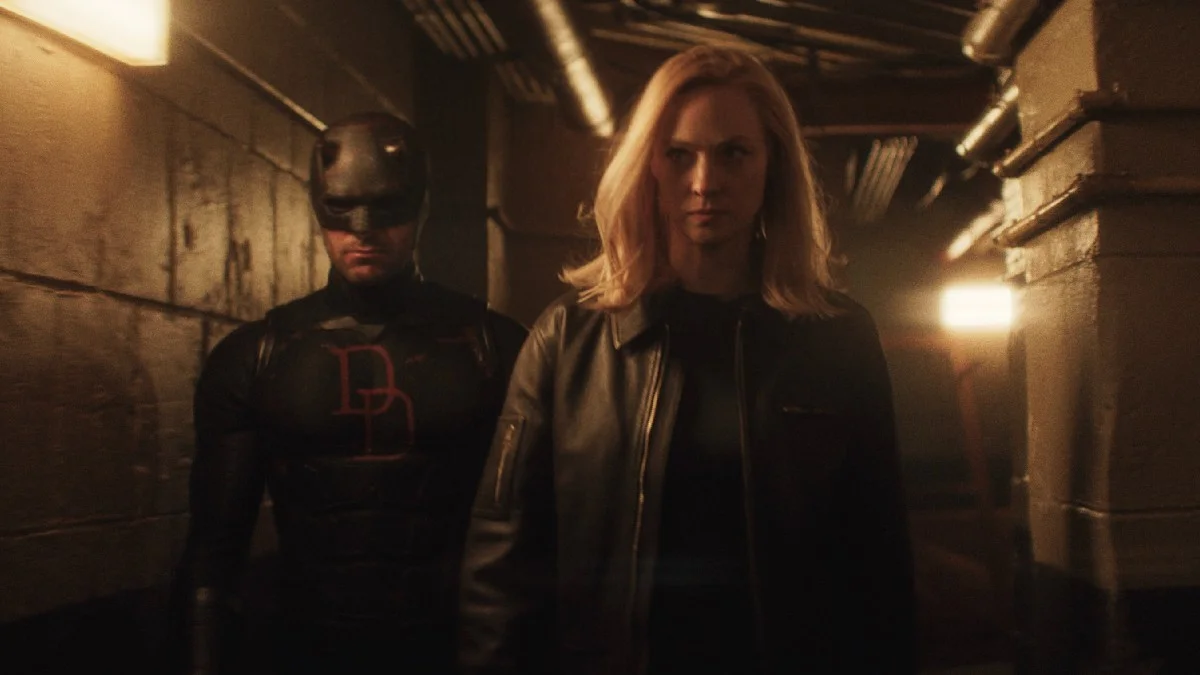
Vanessa dies. The death is what breaks Fisk's containment for good. The rupture I told you was building, that is where it ruptures. D'Onofrio's performance in the back half of episode 8 is the most unrestrained he has ever been as this character. He is not menacing anymore. He is just grief and rage. Grief with the resources of the mayor's office. That scene in the courthouse where he starts hurting protestors and bodyguards alike is one of the most upsetting things Marvel Television has ever put on screen, and I mean that as praise.
Matt ends the season in custody. Fisk resigns and is alone on a beach. The status quo is over.
There is no post-credits scene, but the final cut includes a trailer for the Punisher special, which is the closest thing Marvel could do to a stinger. The implication is that One Last Kill is the next chapter. As I have already complained, the implication is a misdirection.
On the Defenders front: Luke Cage and Jessica Jones reunite in the finale. They have a child together now. They are back in each other's orbit. And it is implied, strongly, that Luke has been doing "wet work" overseas for someone, possibly for Mr. Charles, Matthew Lillard's mystery figure, for the back half of the timeline between his Netflix series and now. The show telegraphs that Luke has hung up his work for the CIA, that Bullseye is being positioned as his replacement on whatever team is being assembled, and the people doing the positioning, by the way, are the CIA. That is the part of the season I have been holding back on, and I think it is the season's sharpest argument.
Dex ends Season 2 in CIA custody, being told he is going to be very useful to them. The CIA in this season is established, with some clarity, as not the good guys. They were Fisk enablers and partners earlier in the run, looking the other way on a lot, and they only turn on Fisk when he becomes inconvenient. When they take Dex in at the end, the implication is that his usefulness to them will involve the kind of work the agency has been doing for the better part of a century. Country-toppling operations. Regime-change campaigns. The family of activities that gave us, just for one example, the 1953 Iran coup that the United States is still paying the bill on more than seventy years later. The state of US-Iran relations right now did not come from nowhere. These conflicts have origins, and the origins very often trace back to the same shop Dex just signed up with.
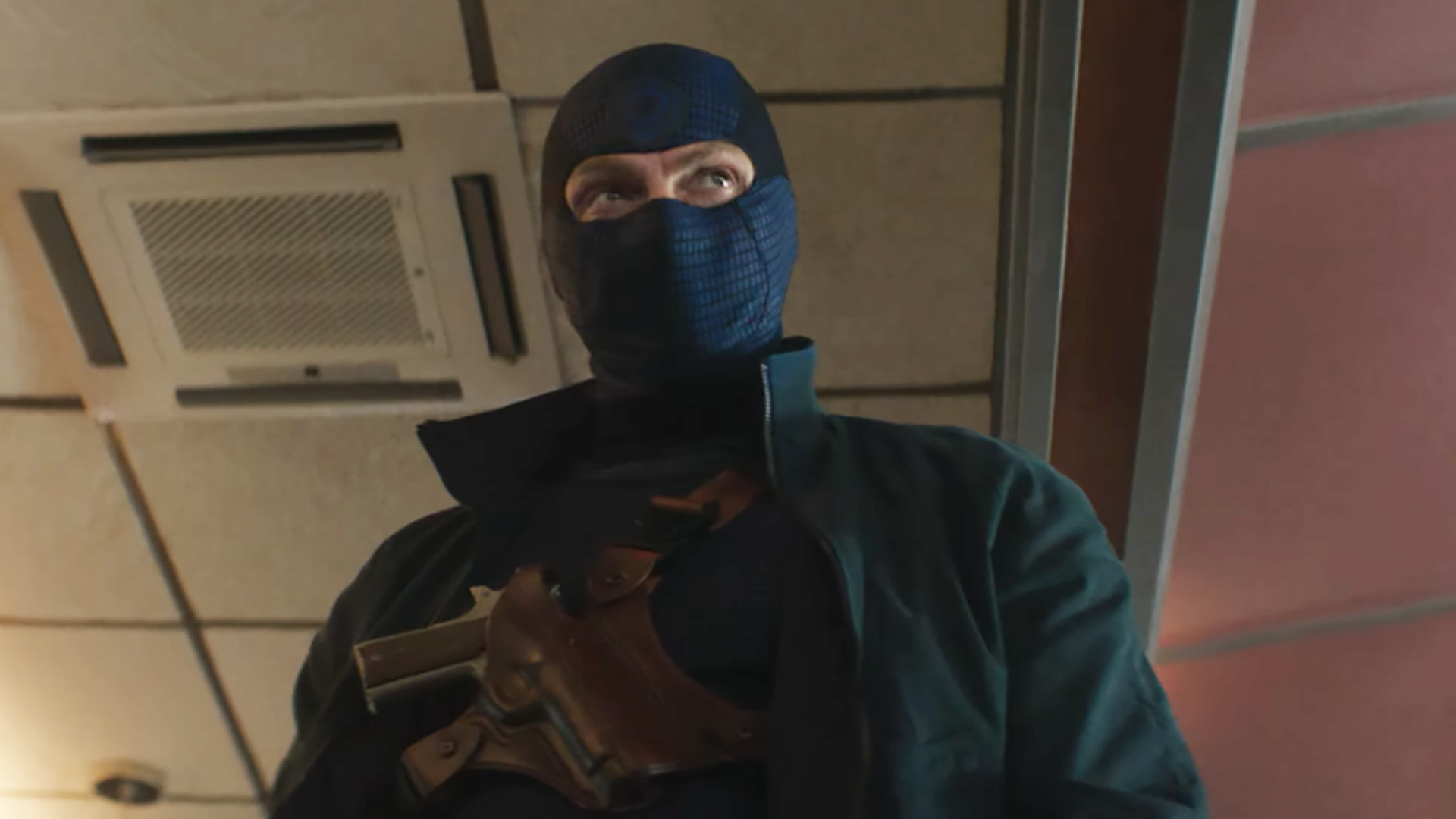
His "redemption" is that he gets to keep doing the same things he was doing in Hell's Kitchen, but with government approval and a target list approved from a windowless office in Langley, Virginia where the CIA office is located. That is not redemption. That is franchising. The show, and I think this is deliberate, is making the argument that institutional violence is the same violence with better paperwork. Bullseye doesn't get better. Bullseye gets contracted. Bethel plays the transition with a stillness I found extraordinarily disturbing. The season earns the right to that argument because it has spent eight episodes showing you, in Wilson Fisk, what state-sanctioned violence at the mayoral level looks like. The CIA at the federal level is just Fisk with a clearer chain of command.
Which is perhaps the Dark Avengers groundwork everyone has been speculating about.
The Dark Avengers as a concept could absolutely work. You have got Bullseye, who, in Season 2, has been made more interesting than he was. You have got Frank Castle. You could add Moon Knight to the mix, and the dynamic between Moon Knight's dissociative identity disorder and Frank's PTSD-driven hallucinations would actually be one of the more honest depictions of trauma teamwork in superhero media. I would watch that.
But for the Punisher to work on that team, the version of the Punisher the team is using has to be a version with a moral framework. The Punisher in One Last Kill is not that version. The Punisher in One Last Kill is mowing through a neighborhood of anonymous figures in masks, faces obscured, names withheld, motives reduced to scenery, because the neighborhood is, the film insists, beyond saving. If you put that Frank Castle on a team with Bullseye, you don't have moral complexity. You have two psychopaths killing slightly different sets of people. The reason Frank's killing is supposed to read differently from Bullseye's is that Frank has a code. Bullseye is a clean psychopath. Frank is supposed to be the man who limits himself to the people who have earned it. Take away the code, and the difference between them is just aesthetics. Frank kills with passion. Dex kills with detachment. Both kill a lot. Frank might kill more. A lot of Frank's victims are just hoodlums. A lot of Dex's victims were corrupt fascist cops. Run that math out loud and tell me which one you would rather have on your team.
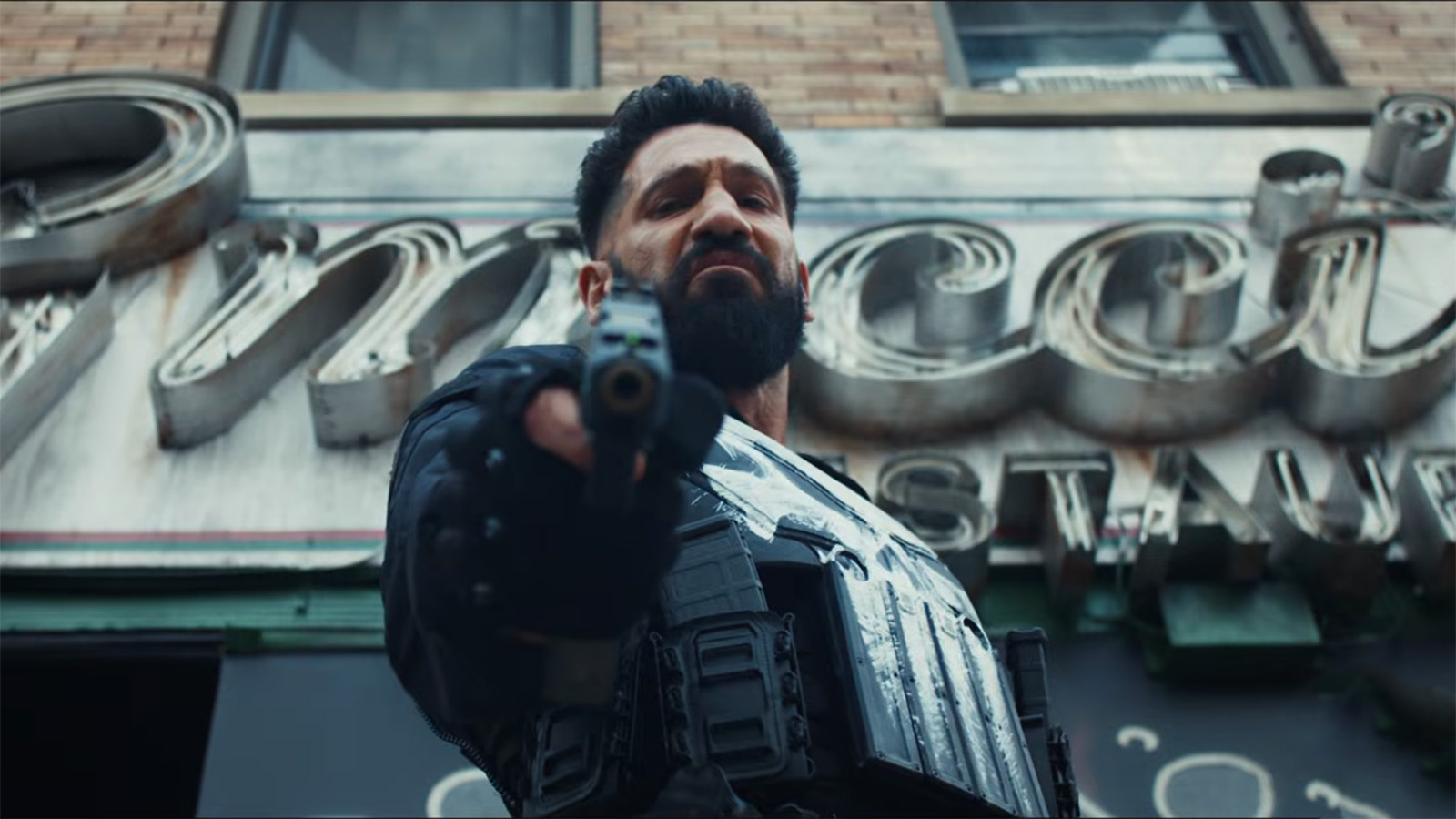
On Ma Gnucci escaping: Judith Light is a great actor, and the film does almost nothing with her. She gets a good speech, but she wheels in, she wheels out, the climactic confrontation never comes. Frank kills the random neighborhood hoodlums she sent after him, but not her or her direct foot soldiers. I assume she is being saved for some future appearance, but as a structural choice within this 48-minute special, it leaves the climax hollow. The actual villain gets a wave-goodbye instead of a reckoning. He does make a choice to save someone instead of going after her, so I guess the film is saying he's found something to care about beyond his revenge.
So Where Does This Leave Us
Marvel Television, under the current leadership, is making the best Marvel television in years. Wonder Man was a 9. Daredevil: Born Again Season 2 is a 9. That is a tier of work I did not expect after the rocky stretch of Secret Invasion, She-Hulk (which I liked but many did not for political and legitimate reasons), and the original troubled production of Born Again Season 1. Dario Scardapane proved that what Season 1 needed was one showrunner instead of three. The result is a season that respects the character, respects the history, and earns every swing it takes.
The Punisher: One Last Kill is a step back. Not a catastrophic one. Bernthal is good. The action is good. Green can direct. But the moral framework is broken. The worldbuilding does not survive contact with the rest of the MCU. And the structural job of bridging Season 1 to Brand New Day is not done. The film is fine. However, it is also the only Marvel Television project this year I would describe as actively offensive in any sense.
If you watch one of these two this week, watch Born Again. If you have already watched Born Again, the Punisher special is a 48-minute curiosity that will hold your attention without earning your respect.
Daredevil: Born Again Season 2 — TNS Rating: 9/10, "Movie Marathon" The Punisher: One Last Kill — TNS Rating: 5/10, "Game Night"